

 Português - Brasil
 Español
 English
Software development company: what it is and how it works
Summary: A software development company builds custom software for other businesses, following a defined process from discovery to delivery. There are three engagement models (fixed scope, dedicated squad, and professional staffing), and each is priced differently. This article explains how they work, what affects the cost, the risks involved, and when this approach makes sense.
In this article
- What is a software development company?
- What is the difference between a software development company and a software house?
- How does a software development company work, step by step?
- What are the engagement models?
- How much does it cost to hire a software development company?
- What are the benefits of outsourcing development?
- What are the risks, and how can each one be reduced?
- When does it make sense to hire a software development company?
- How Premiersoft works
- Frequently asked questions
A software development company specializes in building custom systems, apps, and platforms for other businesses. Instead of building an in-house team from scratch, you hire a team that already has the processes, tools, and experienced professionals to turn a business need into working software. In this article, we explain how this service works in practice, the engagement models available, what affects the price, the benefits and risks, and the signs that it may be the right choice for your project.
What is a software development company?
The name comes from the idea of organized production. Just as a factory has stages, standards, and quality controls, a software development company follows a clear workflow for gathering requirements, designing the solution, coding, testing, and delivery. The goal is predictability: knowing what will be done, by whom, in what order, and according to what quality criteria.
Today, the term is used broadly. It covers everyone from companies that receive a complete specification and deliver the code to partners who contribute to product strategy, design, and ongoing support after a system goes live. That’s why it’s more important to understand what the service includes than to focus on the name.
What is the difference between a software development company and a software house?
In practice, both terms describe the same type of company: one that develops custom software for third parties. A software house is precisely a company that creates programs, apps, and systems for clients instead of selling an off-the-shelf product of its own. The difference between the terms is more about emphasis than the service itself.
- Software development company usually emphasizes production based on well-defined processes and an agreed-upon scope.
- Software house usually emphasizes partnership throughout the product lifecycle, from the idea to continuous improvement.
Many companies work in both ways, depending on the client’s needs. Premiersoft is one example, treating both terms as the same commitment on its software house and software development company page. When comparing providers, what matters is checking the service scope, the team, the working methods, and who owns the code—not the name the company uses.
How does a software development company work, step by step?
Every company has its own approach, but a well-managed project typically goes through these stages:
- Discovery. A conversation to understand the problem, the systems involved, and the business goals. This is where you decide whether the right approach is a new system, an upgrade to an existing one, or an integration.
- Definition. Product strategy, architecture and technology choices, and an execution roadmap with priorities. The result is a proposal outlining the scope, team, and timeline.
- Design and architecture. User flows, screens (UX/UI), and the technical structure that will support the system as it grows.
- Development in short cycles. Instead of delivering everything at the end, the team releases functional versions at the end of each cycle. You can see the product evolve and adjust course early.
- Testing at every stage. Automated, usability, and performance testing to find issues before they reach users.
- Deployment. Launching the system securely, preferably with DevOps practices that automate the release of new versions.
- Maintenance and evolution. Monitoring, incident resolution, and continuous improvements after delivery.
The key is iterative development. At Premiersoft, for example, the software is already working in the first month, and the MVP is ready in up to 3 months, with testing at every stage. See how this works with our custom software development service and the PagueVeloz case study.
What are the engagement models?
There is no single way to engage a software development company. The three most common models differ in who manages the work, how fees are charged, and who is accountable for delivery.
| Model | When to use it | How it’s billed | Who manages it | Considerations |
|---|---|---|---|---|
| Fixed scope (project) | A clear objective and scope that can be prioritized upfront | Project fee, defined in the proposal | The software development company | Scope changes are usually renegotiated |
| Dedicated squad | A product that will evolve over a long period and has a changing scope | Monthly fee for the team | The software development company, with client involvement | Requires close product oversight |
| Staff augmentation | An in-house team with established processes and technical leadership that needs additional capacity | Fee per professional, based on seniority | The client | Results depend on how you manage your team |
Fixed scope (project)
You hire a team to deliver a specific outcome: a system, an app, or a module with scope, timeline, and team defined in the proposal. The software development company manages the team and is accountable for delivery. This works well when the objective is clear and the scope can be prioritized upfront. An extreme example is the AI MVP Sprint, where the scope is finalized and prioritized on the first day to deliver a functional MVP in up to 15 days.
Dedicated squad
You hire a small, multidisciplinary team—with developers, QA, design, and data specialists—dedicated to a specific objective. The scope is more flexible, and the team can be adjusted as the project progresses. At Premiersoft, this model is called Squads Agênticas, where specialists and AI agents work together, and people review everything before it goes into production. To learn how AI-enabled work stays reliable, read the article about spec-driven development.
Staff augmentation
You hire professionals who join your team and are managed by your team. This model is a good fit when you already have processes and technical leadership in place and need additional capacity. The market also calls this body shop or staff augmentation. Learn how IT staff augmentation works.
How much does a software development company cost?
The cost depends on the engagement model, and each one is billed differently. With a fixed-scope project, you pay a project fee, determined after the deliverables are understood. With a dedicated squad, you pay a monthly fee for the team, which provides cost predictability and flexibility to change the scope. With staff augmentation, you pay per professional, and seniority has the greatest impact on the cost.
Regardless of the model, five factors affect the price:
- the scope size, meaning how many features and screens the system will have;
- the number of people on the project;
- the seniority of the team;
- the timeline, since very short timelines require more people working at the same time;
- the complexity of integrations with systems you already use.
That’s why you should be wary of fixed quotes without a discovery conversation: without understanding the problem, no one can estimate the cost reliably. To compare proposals from different vendors, ask each one to specify what’s included, who does what, how scope changes are billed, how post-delivery maintenance will work, and who owns the code.
What are the benefits of outsourcing software development?
- Faster start. The team is already in place, works together, and has established processes. You don’t have to wait months to hire people before the project can move forward.
- Multidisciplinary team. Architecture, UX/UI, development, and quality assurance on the same project, without having to hire for each role.
- Predictability. Scope, timeline, and metrics agreed on from day one.
- Focus on the business. Your team can focus on strategic priorities while technical execution is handled by people who do it every day.
- Accumulated experience. A software development company with years of project experience has already faced challenges similar to yours and knows where delays tend to happen.
What are the risks, and how can you reduce each one?
Outsourcing software development also comes with risks. The good news is that almost all of them can be reduced by choosing the right partner and setting clear contract terms.
- Unclear scope. If no one knows exactly what needs to be delivered, the project falls behind schedule and costs more. Mitigate this with a discovery phase and clear priorities.
- Delivery only at the end. Projects that show the software only in the final stretch hide problems. Require working versions in short cycles.
- Vendor dependency. If only the software factory understands the code, switching partners becomes expensive. Make sure the contract states that the source code belongs to you, with access to the repository and documentation.
- Low quality. Ask how testing is performed and who reviews the code. Automated testing and reviews at every stage make a difference.
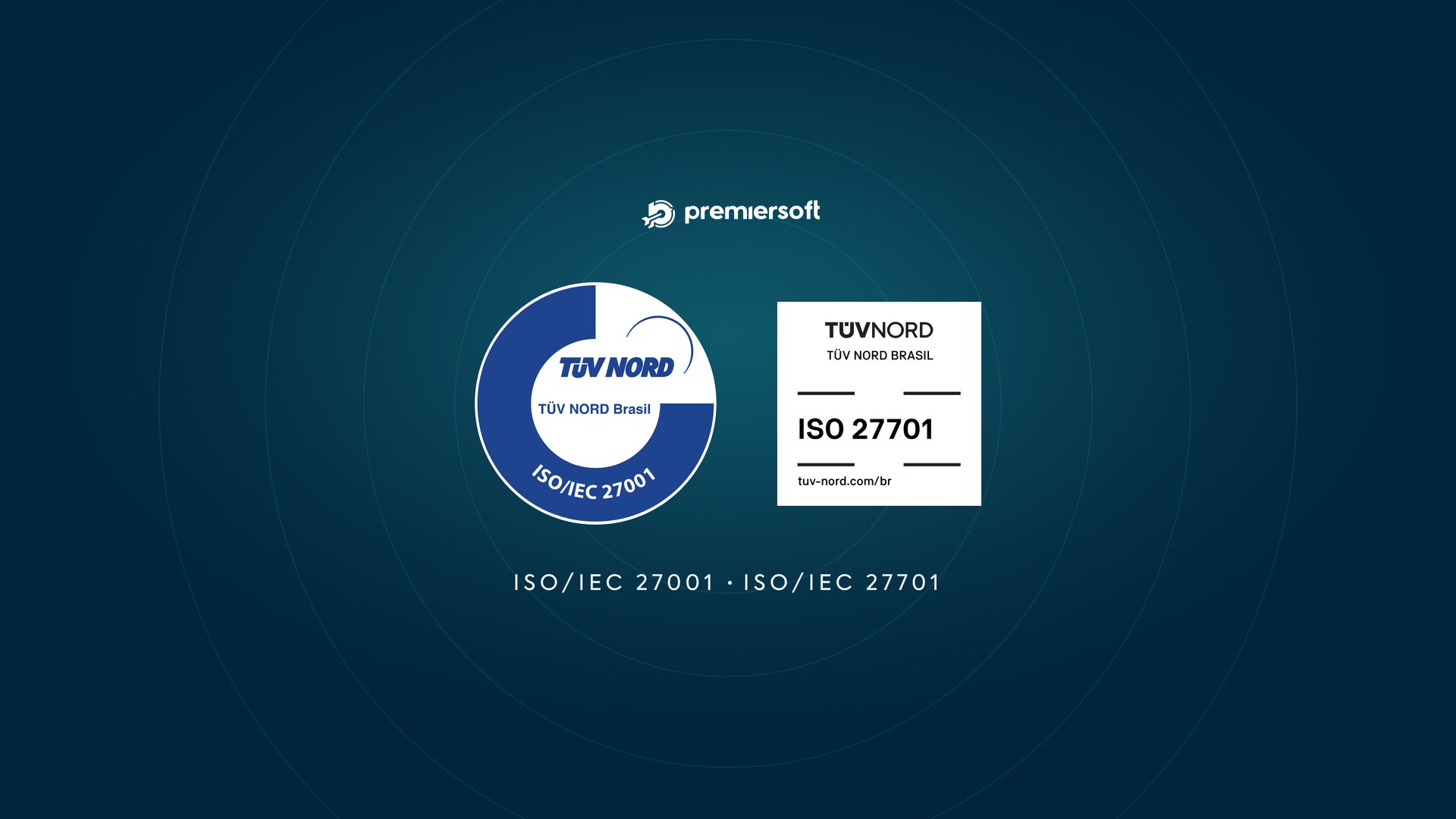
- Data security. Review the information security practices. Certifications such as ISO/IEC 27001 show that there is an audited management system in place.
- Abandonment after delivery. Software needs maintenance. Agree from the outset on how ongoing system support will work.
When does hiring a software factory make sense?
Hiring a software factory is usually the best choice when:
- you need a new digital product and don't have an in-house team to build it;
- your in-house team is busy with operations and important projects are stalled;
- the project requires skill sets your company doesn't have, such as architecture, UX/UI, or quality assurance;
- you need to validate an idea in the market quickly with an MVP;
- a legacy system needs to be rebuilt or modernized.
On the other hand, if you already have strong technical leadership and just need more people, staff augmentation may be simpler. And if you still don't know which problem to solve first, it's worth starting with an strategic IT consulting engagement before hiring a development team.
How Premiersoft works
Premiersoft is a technology company founded in 2011 in Blumenau, Brazil, with offices in São Paulo and Santa Monica, California. The journey we offer has three phases:
- Define: market and business strategy, architecture and technologies, project management and governance.
- Develop: the right model for each need, whether a software house, squad, or staff augmentation.
- Optimize: ongoing support, data analysis, and consulting to improve what's already live.
We work with Agile and DevOps, with a team that brings together product strategy, development, architecture, UX/UI, and quality assurance. One example is the PagueVeloz case study: the app MVP was delivered after 1 month of development, and the fintech saw a 211% increase in its number of customers. Premiersoft's information security and privacy management systems are certified to the ISO/IEC 27001 and ISO/IEC 27701 standards.
Want to turn an idea into reality or get a stalled project moving? Learn about Premiersoft's custom software development service and talk to a specialist. In a discovery conversation, we'll understand your challenge and recommend the right engagement model for your needs.
Frequently asked questions about software factories
What does a software factory do?
It develops custom software for other companies: it understands the problem, designs the solution, writes the code, tests it, and launches it. Many also handle product strategy, design, and ongoing support after delivery.
What is a software house?
It's a company that develops software for other businesses, such as custom apps, systems, and platforms, rather than selling an off-the-shelf product of its own. In practice, it's the same type of company as a software factory.
What's the difference between a software factory and a software house?
Both names describe the same service. "Software factory" usually emphasizes production with a well-defined process; "software house" emphasizes the partnership throughout the product lifecycle. What matters is what's included in the proposal.
How long does it take to develop custom software?
It depends on the size of the project. With development in short cycles, you can have working software early. At Premiersoft, the software is already running in the first month, and the MVP is ready within 3 months. The timeline for the full project is defined in the proposal after discovery.
How much does it cost to hire a software factory?
It depends on the engagement model: fixed-scope projects charge a set amount for the project, a dedicated squad charges a monthly fee for the team, and staff augmentation charges per professional. The price varies based on scope, team size, seniority, timeline, and integrations. Be wary of quotes without a discovery phase, because no one can estimate reliably without understanding the problem.
Who owns the code developed by a software factory?
This needs to be stated in the contract. Ideally, the source code belongs to the client, who should have access to the repository from the start. For example, with Premiersoft's AI MVP Sprint, all code is owned by the client and delivered with access to the project repository.
Which engagement model should I choose?
Fixed-scope works when the goal is clear. A squad works when the product will evolve over a long period and the scope changes. Staff augmentation works when you already have technical management and need more capacity. A good software factory will help you choose during the discovery conversation.
 Peter Rausch

 Jonatan P. Paulo